
Thermal treatment technologies are essential for managing organic waste, including food waste, agricultural residues, and sewage sludge. These processes use heat to reduce waste volume, recover energy, and convert waste into usable byproducts. Here’s a detailed breakdown of modern thermal treatment technologies for organic waste:
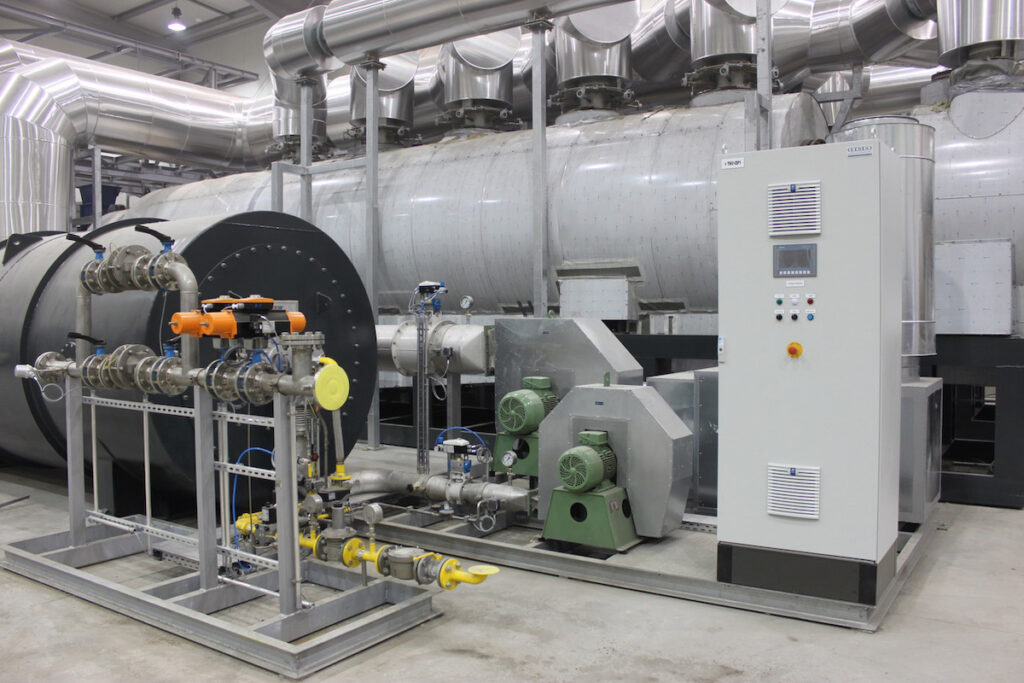
1. Incineration with Energy Recovery
Overview:
Incineration involves the controlled combustion of organic waste at high temperatures, typically ranging from 850°C to 1,100°C, to reduce waste volume and generate energy.
Process Steps:
- Waste Preparation: Organic waste is shredded, dried (if needed), and homogenized to ensure consistent combustion.
- Combustion:
- Primary Chamber: Combustion begins with oxygen-rich conditions to ignite organic matter.
- Secondary Chamber: Ensures complete combustion of unburned gases and particulates.
- Energy Recovery:
- Heat produced is captured using heat exchangers to generate steam.
- Steam drives turbines to produce electricity (Waste-to-Energy plants).
- Flue Gas Treatment:
- Scrubbers and filters remove harmful gases (e.g., sulfur oxides, nitrogen oxides).
- Particulate matter is captured using electrostatic precipitators or bag filters.
- Ash Management:
- Bottom Ash: Can be used in construction materials.
- Fly Ash: Requires safe disposal due to its hazardous content.
Advantages:
- Significant waste volume reduction (up to 90%).
- Generates renewable energy.
- Reduces dependence on landfills.
Challenges:
- High initial investment costs.
- Concerns about air pollution and toxic residues.
2. Pyrolysis
Overview:
Pyrolysis is a thermal decomposition process where organic waste is heated to 300°C–800°C in the absence of oxygen, producing valuable byproducts like bio-oil, biochar, and syngas.
Process Steps:
- Feedstock Preparation: Organic waste is dried and ground to reduce moisture and size.
- Heating:
- The waste is heated in an oxygen-free environment.
- Organic material breaks down into smaller molecular compounds.
- Product Separation:
- Biochar: Solid residue rich in carbon, used as a soil amendment or fuel.
- Bio-oil: Liquid fuel used in industrial applications or refined further.
- Syngas: A gaseous mixture of hydrogen, methane, and carbon monoxide, used for heat or electricity.
Advantages:
- Converts waste into high-value products.
- Low emissions compared to incineration.
- Biochar contributes to carbon sequestration.
Challenges:
- Requires precise control of operating conditions.
- Limited by the variability of waste feedstock.
3. Gasification
Overview:
Gasification converts organic waste into syngas at high temperatures (800°C–1,200°C) in a controlled oxygen or steam environment. The process is more efficient and cleaner than incineration.
Process Steps:
- Waste Preparation: Pre-treatment includes drying, shredding, and homogenization.
- Gasification:
- Partial combustion occurs with limited oxygen.
- Converts waste into syngas, ash, and tar.
- Syngas Cleaning:
- Removes impurities like tar, sulfur, and particulates.
- Purified syngas is used for energy generation or as a chemical feedstock.
- Energy Utilization:
- Electricity or heat generation through turbines or engines.
- Hydrogen production for industrial applications.
Advantages:
- High energy recovery efficiency.
- Produces cleaner emissions compared to incineration.
- Flexibility in feedstock (organic waste, plastics, etc.).
Challenges:
- Expensive gas cleaning systems.
- Complex operation requiring skilled labor.
4. Torrefaction
Overview:
Torrefaction involves heating organic waste to 200°C–300°C in a low-oxygen environment, producing a lightweight, energy-dense material similar to coal, often called “biocoal.”
Process Steps:
- Drying: Reduces the moisture content of the waste.
- Heating:
- Waste is slowly heated, releasing volatile gases.
- Produces a solid, hydrophobic material.
- Product Handling:
- The solid product is pelletized or briquetted for use as fuel.
Advantages:
- Enhances the fuel properties of organic waste.
- Simplifies storage and transportation due to hydrophobic nature.
- Produces a renewable alternative to coal.
Challenges:
- Limited to specific waste types.
- Requires additional processing for energy recovery.
5. Hydrothermal Carbonization (HTC)
Overview:
HTC mimics natural coal formation by heating organic waste in water under pressure (180°C–250°C), converting it into hydrochar.
Process Steps:
- Preparation: Organic waste is mixed with water.
- Pressurized Heating:
- Waste is subjected to high pressure and temperature in a reactor.
- Converts organic matter into hydrochar, gases, and liquids.
- Separation:
- Hydrochar is extracted, dried, and used as a solid fuel.
- Liquid phase is treated for nutrient recovery or energy extraction.
Advantages:
- Handles wet waste efficiently.
- Produces a clean and compact fuel source.
- Retains nutrients in the liquid phase for agricultural use.
Challenges:
- High energy input for pressurization.
- Requires efficient water management systems.
6. Plasma Arc Gasification
Overview:
An advanced thermal technology that uses an electric arc to generate plasma (temperatures above 5,000°C) to break down waste into syngas and a glassy slag.
Process Steps:
- Preparation: Waste is shredded and dried.
- Plasma Treatment:
- Waste is exposed to the plasma arc.
- Organic material vaporizes into syngas.
- Inorganic material melts into slag.
- Syngas Utilization:
- Used for energy generation or chemical synthesis.
- Slag Management:
- The inert slag can be used in construction materials.
Advantages:
- Virtually eliminates waste, leaving no ash or residues.
- Produces high-quality syngas.
- Safe disposal of hazardous components.
Challenges:
- Extremely high operational costs.
- Limited commercial deployment due to technological complexity.
Comparison of Technologies
| Technology | Temperature Range | Key Products | Advantages | Limitations |
| Incineration | 850°C–1,100°C | Energy, Ash | Waste reduction, energy recovery | High emissions, ash disposal issues |
| Pyrolysis | 300°C–800°C | Bio-oil, Biochar | Valuable products, low emissions | Requires precise control |
| Gasification | 800°C–1,200°C | Syngas, Ash | Efficient energy recovery | Expensive cleaning systems |
| Torrefaction | 200°C–300°C | Biocoal | Improved fuel properties | Limited waste compatibility |
| Hydrothermal Carbonization | 180°C–250°C | Hydrochar | Efficient for wet waste | High energy input |
| Plasma Arc Gasification | >5,000°C | Syngas, Slag | Minimal residue, high efficiency | Very costly and energy-intensive |
These technologies complement each other and are selected based on waste characteristics, desired outputs, and economic considerations. The integration of thermal treatment into waste management systems contributes to resource recovery and sustainability.


