
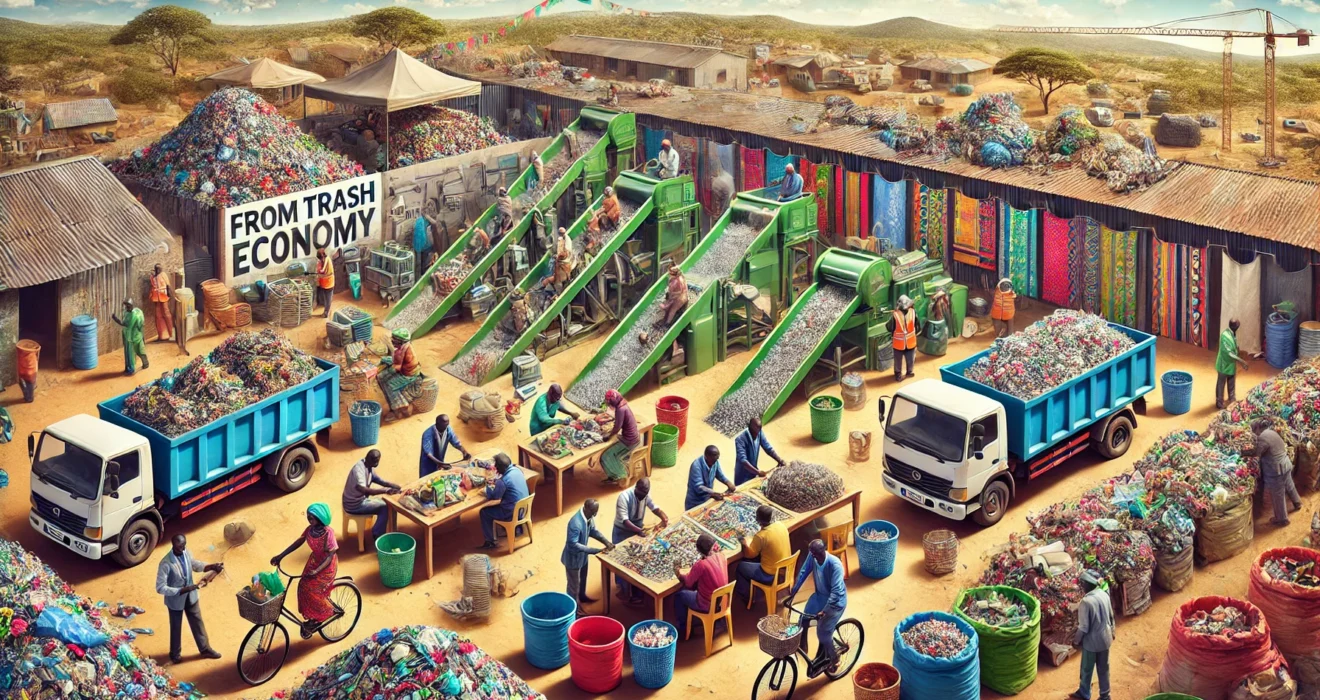
From Trash to Cash: Opportunities in Kenya’s Waste Economy
Introduction: A Growing Industry in Kenya
In recent years, Kenya has been grappling with significant waste management challenges, particularly in urban areas like Nairobi, Mombasa, and Kisumu. With rapid urbanization and industrial growth, the amount of waste generated has increased exponentially. However, where there is waste, there is also potential. The waste economy in Kenya, often referred to as the “circular economy,” offers significant opportunities for innovation, job creation, and sustainable development. By harnessing the value hidden in trash, Kenya has the chance to turn waste into a thriving industry that benefits communities, the environment, and the economy at large.
This article explores the various opportunities within Kenya’s waste economy, focusing on the potential for job creation, recycling industries, waste-to-energy solutions, and the role of informal waste collectors. It will also discuss how the transition from waste to wealth can contribute to Kenya’s broader goals of economic growth and environmental sustainability.
The Waste Challenge in Kenya
Kenya’s waste management system is under immense pressure. According to the Kenya National Waste Management Strategy, over 4,000 tons of waste are generated daily in urban centers, with Nairobi alone producing nearly 2,400 tons daily. The majority of this waste is improperly disposed of, leading to environmental pollution, clogged drainage systems, and the contamination of water sources. With a population of over 50 million, much of the waste generated is plastic, e-waste, organic waste, and industrial waste.
While the problem of waste accumulation may seem overwhelming, it also presents an opportunity. Waste that is not properly managed can be a source of untapped resources. Waste-to-resource innovations, such as recycling, composting, and energy recovery, are transforming trash into cash. By focusing on recycling and waste management, Kenya can create a new wave of economic opportunities that promote sustainability and job creation.
Recycling: Turning Waste into Valuable Resources
Recycling is one of the most important components of Kenya’s emerging waste economy. By diverting recyclable materials from landfills and reprocessing them into valuable products, the recycling industry can contribute significantly to the economy. In Kenya, recyclable materials such as plastic, glass, paper, and metals are being collected, processed, and sold to local and international markets.
The plastic waste problem in Kenya is particularly pressing. Plastic pollution, especially single-use plastics, is ubiquitous in urban areas and the countryside. In 2017, Kenya introduced one of the world’s toughest plastic bag bans, prohibiting the production, sale, and use of plastic bags. This move was a step towards reducing plastic waste, but the country’s plastic waste management infrastructure remains underdeveloped.
However, the growing demand for recycled plastic products is creating new opportunities in the waste economy. Several businesses in Kenya are already turning plastic waste into products such as paving blocks, roofing tiles, and even furniture. For example, companies like Ecoplastile are using plastic waste to create durable paving tiles, addressing two problems at once: reducing plastic waste and providing affordable building materials. The expansion of such initiatives presents opportunities for entrepreneurs and investors to tap into the recycling industry while addressing pressing environmental challenges.
Waste-to-Energy: Harnessing Power from Waste
Waste-to-energy (WTE) technology is another promising opportunity within Kenya’s waste economy. The growing need for sustainable energy solutions in Kenya, combined with the abundant waste resources available, makes WTE a viable solution for the country’s energy deficit. WTE involves converting non-recyclable waste materials into energy, such as electricity or heat, through processes like incineration, gasification, or anaerobic digestion.
Kenya has already begun to explore WTE solutions. In 2020, the Nairobi Waste to Energy Project was launched, a collaborative effort between the government and private sector partners to convert Nairobi’s waste into electricity. The project has the potential to generate up to 700 megawatts of power from the city’s waste, providing much-needed energy to the national grid while reducing the amount of waste that ends up in landfills.
Waste-to-energy technologies can also support Kenya’s renewable energy goals, which include increasing the share of renewable energy in the country’s energy mix to 100% by 2030. The development of WTE infrastructure would not only contribute to reducing waste but also create new opportunities for investment, job creation, and energy independence.
The Role of Informal Waste Collectors
Informal waste collectors, often referred to as “waste pickers,” play a crucial role in Kenya’s waste economy. These individuals, who work outside the formal waste management system, collect recyclable materials such as plastic, metal, and paper from households, streets, and landfills. While they often work in difficult and hazardous conditions, they help divert large amounts of waste from landfills and contribute to the recycling process.
Empowering informal waste collectors offers one of the most immediate opportunities for enhancing Kenya’s waste management system. By formalizing this sector, providing workers with better tools, training, and protective equipment, waste pickers could increase their efficiency, reduce health risks, and improve the quality of recyclable materials. Formalizing the role of waste pickers also means they can earn a fair wage for their efforts, improving their livelihoods and contributing to local economies.
In Nairobi, the Kenya Waste Pickers Association has been advocating for better working conditions and rights for waste pickers. With more support and recognition, the informal sector could become a significant source of income for many, turning waste collection into a viable livelihood option while contributing to a more sustainable waste management system.
Job Creation in the Waste Economy
One of the most significant benefits of a well-developed waste economy in Kenya is job creation. According to a report by the International Labour Organization (ILO), the recycling industry alone has the potential to create thousands of jobs in Kenya, especially as the country works to formalize the waste collection and recycling sectors.
In addition to recycling jobs, the waste economy can also create employment opportunities in areas like waste management services, research and development for new recycling technologies, waste-to-energy production, and the manufacturing of eco-friendly products from recycled materials. For instance, companies involved in the production of products made from recycled plastic, such as paving blocks or furniture, can expand to meet growing demand, leading to the creation of more manufacturing jobs.
By promoting entrepreneurship in the waste sector, such as the development of waste sorting facilities or waste-to-energy plants, Kenya can also foster innovation and local business growth. As waste management becomes an increasingly important industry, more businesses will be needed to provide services and create products that utilize waste materials, further expanding employment opportunities.
Challenges in Kenya’s Waste Economy
While the opportunities in Kenya’s waste economy are significant, several challenges need to be addressed to fully capitalize on them. One of the main challenges is the lack of a robust waste management infrastructure. Waste collection services in many urban areas are inadequate, and recycling facilities are often underdeveloped or nonexistent. Without proper infrastructure, it is difficult for the waste economy to grow in a sustainable way.
Another challenge is the informal nature of waste collection in many areas, which can lead to inefficiencies and poor working conditions for waste pickers. Without legal recognition and proper protection, these workers face challenges related to job security, safety, and fair compensation.
Additionally, there is a lack of public awareness about the importance of recycling and waste management. Many Kenyans still dispose of waste in informal ways, such as dumping it in the streets or burning it. Raising awareness about the economic and environmental benefits of recycling and waste management is essential to shifting public attitudes and behaviors towards more sustainable practices.
Policy and Regulation: Supporting the Waste Economy
To unlock the full potential of Kenya’s waste economy, the government must play a critical role in developing policies, regulations, and incentives that promote sustainable waste management practices. The government can encourage private sector investment in recycling technologies and waste-to-energy projects by providing tax incentives or subsidies for green technologies. Additionally, the government can implement policies that formalize waste collection, ensuring that informal waste collectors are integrated into the formal economy and provided with fair wages and safe working conditions.
The government should also prioritize the expansion of waste infrastructure, including recycling facilities, waste sorting centers, and waste-to-energy plants, to create a more efficient and sustainable waste management system. Public-private partnerships can be instrumental in facilitating the growth of the waste economy and ensuring that waste management services are accessible and effective.
Finally, educational campaigns can raise awareness about the benefits of recycling, waste reduction, and sustainable waste management. By encouraging the public to reduce, reuse, and recycle, Kenya can build a culture of sustainability that supports the growth of the waste economy.
Conclusion: A Bright Future for Kenya’s Waste Economy
Kenya’s waste economy presents a wealth of opportunities for economic growth, job creation, and environmental sustainability. By recognizing the value in waste and investing in the infrastructure, policies, and technologies needed to support the sector, Kenya can turn trash into cash, creating a more sustainable and prosperous future for its citizens. From recycling industries to waste-to-energy solutions, the waste economy can drive innovation and contribute to Kenya’s long-term goals of economic development and environmental conservation.
Through the empowerment of informal waste collectors, the expansion of waste management services, and the promotion of sustainable practices, Kenya can transform its waste challenges into economic opportunities, benefiting both its people and the planet. As the global economy shifts toward sustainability, Kenya is poised to be a leader in the waste economy, paving the way for a cleaner, greener future.


