
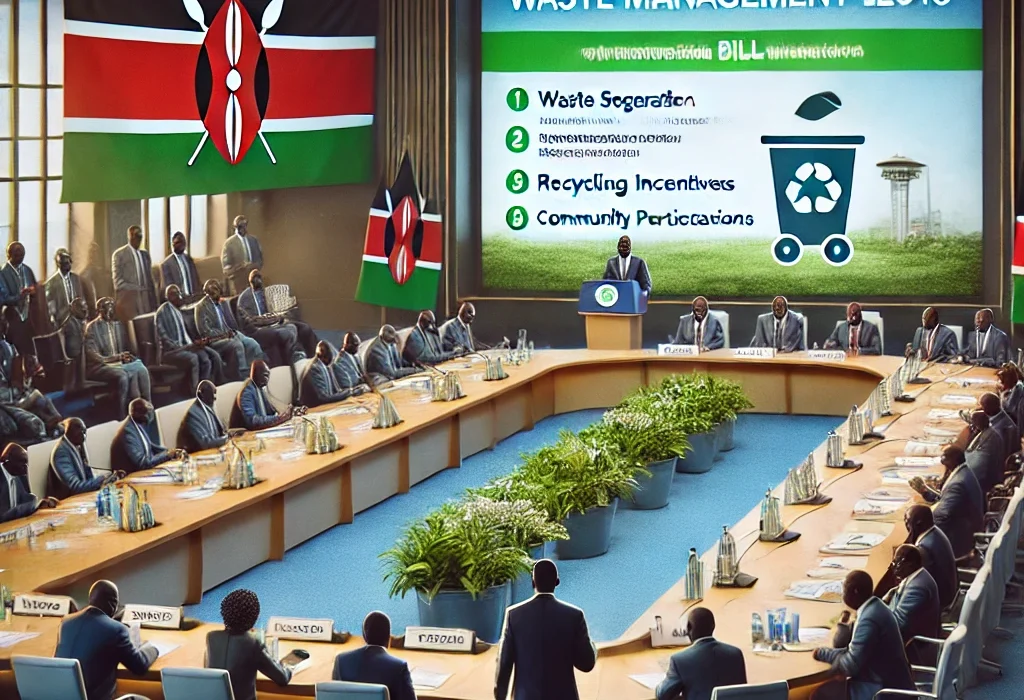
An Overview of The Kenya Integrated Waste Management Bill (2018)
Waste management is one of the most pressing environmental challenges in Kenya today, especially in the face of rapid urbanization, population growth, and industrial expansion. Improper waste disposal contributes to pollution, climate change, and health hazards that affect millions of Kenyans. In response to these challenges, the Kenyan government has taken significant steps to strengthen the country’s waste management framework. One of the most notable initiatives is the Kenya Integrated Waste Management Bill (2018), which aims to provide a comprehensive legal and institutional framework for managing waste across the country.
This blog explores the Kenya Integrated Waste Management Bill (2018), its objectives, provisions, and potential impact on the environment, communities, and the economy. It also discusses the challenges and opportunities that arise from its implementation and how it aligns with the country’s broader environmental sustainability goals.
Background: The Waste Management Challenge in Kenya
Kenya, like many other developing nations, faces serious waste management challenges. With an estimated population of over 50 million people, rapid urbanization, and increasing industrial activity, the amount of waste generated in the country has escalated significantly. For instance, Nairobi, Kenya’s capital city, produces more than 2,000 tons of solid waste daily, but only a fraction of this waste is properly collected and disposed of. Much of it ends up in informal dumpsites, rivers, and other open spaces, contributing to environmental degradation and health risks.
The issue is compounded by the lack of adequate waste management infrastructure, public awareness about the importance of waste segregation, and insufficient enforcement of existing waste management regulations. Despite some progress, such as the introduction of plastic bag bans and municipal waste collection services, waste management has remained fragmented and inefficient.
In light of these challenges, the Kenyan government introduced the Kenya Integrated Waste Management Bill (2018), a legislative proposal aimed at addressing the country’s waste crisis through a more structured, inclusive, and sustainable approach. This Bill seeks to establish a legal framework that integrates waste management at local, regional, and national levels while promoting a circular economy and resource efficiency.
The Objectives of the Kenya Integrated Waste Management Bill (2018)
The Kenya Integrated Waste Management Bill (2018) is designed to achieve several key objectives, all of which are centered around creating a more sustainable and efficient waste management system. The primary goals of the Bill include:
- To provide a comprehensive legal framework for managing waste: The Bill establishes a structured approach to waste management by addressing key areas such as waste segregation, collection, transportation, disposal, recycling, and resource recovery. It outlines the roles and responsibilities of different stakeholders, including national and county governments, the private sector, and the general public.
- To promote a circular economy: The Bill encourages the adoption of a circular economy, which focuses on reducing, reusing, and recycling waste rather than simply disposing of it. This is in line with Kenya’s broader environmental policy objectives, which emphasize sustainability and resource conservation. The circular economy model is designed to minimize waste generation, reduce pollution, and promote the reuse of materials.
- To improve waste segregation at the source: One of the critical components of the Bill is the promotion of waste segregation at the point of generation. By separating organic waste, recyclable materials, and non-recyclable items, the Bill seeks to enhance the efficiency of recycling processes and reduce the amount of waste sent to landfills. It calls for the establishment of waste collection points and systems for sorting waste in both urban and rural areas.
- To enhance public participation and awareness: The Bill emphasizes the importance of educating the public on waste management practices and creating avenues for community participation. By raising awareness about the dangers of improper waste disposal and the benefits of waste reduction, the Bill aims to foster a culture of responsible waste management across all sectors of society.
- To ensure the safe disposal of hazardous waste: The Bill includes specific provisions for the management of hazardous waste, including industrial chemicals, e-waste, and medical waste. It mandates that these materials be safely handled, transported, and disposed of to minimize their negative impact on human health and the environment.
- To encourage innovation in waste management technologies: The Bill acknowledges the importance of technological innovation in solving the waste crisis. It encourages the adoption of new technologies, including waste-to-energy solutions, recycling innovations, and waste processing technologies, to reduce the environmental impact of waste and create value from discarded materials.
Key Provisions of the Kenya Integrated Waste Management Bill (2018)
The Kenya Integrated Waste Management Bill (2018) contains several important provisions that lay the foundation for effective waste management practices. These provisions are designed to integrate waste management into Kenya’s national and county-level governance structures while promoting innovation and collaboration among all stakeholders. Some of the key provisions include:
- Establishment of Waste Management Authorities
The Bill proposes the establishment of a National Waste Management Authority (NWMA) that will be responsible for overseeing waste management activities across the country. The NWMA will coordinate waste management efforts at the national level, develop national waste management strategies, and ensure compliance with the waste management laws. In addition to the NWMA, the Bill calls for the creation of local waste management authorities at the county level to implement waste management policies and manage waste collection, recycling, and disposal within their jurisdictions. - Waste Classification and Segregation
The Bill requires waste generators (including households, industries, and commercial establishments) to classify and segregate their waste at the point of generation. It mandates that waste be sorted into distinct categories, including organic waste, recyclables, and non-recyclables, and establishes protocols for the collection and disposal of each category. This provision is critical for improving the efficiency of recycling and reducing the amount of waste that ends up in landfills. - Extended Producer Responsibility (EPR)
One of the most innovative aspects of the Kenya Integrated Waste Management Bill (2018) is the introduction of the Extended Producer Responsibility (EPR) framework. Under this framework, producers and manufacturers will be held responsible for the entire lifecycle of their products, including their disposal. This means that companies will be required to manage the waste generated by their products, either by setting up collection systems or contributing to recycling efforts. The goal of EPR is to encourage producers to design products that are easier to recycle or reuse, thereby reducing waste and encouraging sustainability throughout the production chain. - Waste-to-Energy Initiatives
The Bill recognizes the potential of waste-to-energy (WTE) technologies in managing waste while generating energy. It encourages the development of WTE plants that can convert waste materials into energy, such as electricity or biogas. By incorporating WTE into the waste management system, Kenya can reduce its reliance on landfills, minimize greenhouse gas emissions, and generate renewable energy from waste. - Waste Disposal and Landfill Management
The Bill outlines specific requirements for the establishment and management of sanitary landfills, which are designed to safely dispose of waste without harming the environment. It includes provisions for landfill design, operation, and monitoring to ensure that waste is properly contained and that toxic substances are prevented from contaminating soil and water resources. The Bill also calls for the gradual reduction of landfills through waste diversion strategies, such as recycling and composting. - Incentives for Recycling and Resource Recovery
To encourage the recycling of waste materials, the Bill proposes a range of incentives for private companies and local communities engaged in waste management activities. These incentives may include tax breaks, grants, and subsidies for setting up recycling plants or waste collection services. By creating a supportive environment for recycling, the Bill aims to stimulate the growth of the recycling industry and reduce the amount of waste that ends up in landfills.
Potential Impact of the Kenya Integrated Waste Management Bill (2018)
If fully implemented, the Kenya Integrated Waste Management Bill (2018) could have far-reaching effects on the country’s environment, economy, and society.
- Environmental Benefits
The Bill’s focus on waste reduction, recycling, and resource recovery will help reduce the environmental pollution caused by improper waste disposal. With waste segregation and recycling, less waste will be sent to landfills, leading to cleaner urban environments and fewer pollution incidents. The promotion of waste-to-energy technologies will also help mitigate the environmental impact of waste, providing a renewable energy source and reducing dependence on fossil fuels. - Economic Opportunities
The Bill has the potential to create new economic opportunities in the waste management and recycling sectors. By promoting recycling and the development of waste processing industries, the Bill could create jobs, stimulate local economies, and foster innovation. Additionally, the introduction of the EPR framework will encourage the design of eco-friendly products, which could lead to the emergence of new markets for sustainable goods. - Improved Public Health
Proper waste management is closely linked to improved public health. By reducing open dumping and enhancing waste collection and disposal services, the Bill can help reduce the spread of diseases associated with poor sanitation, such as cholera, malaria, and respiratory infections. The reduction of hazardous waste and its proper disposal will also decrease the risk of chemical contamination and other health hazards. - Public Awareness and Engagement
The Bill’s emphasis on public education and awareness campaigns will foster a greater sense of environmental responsibility among Kenyans. By involving communities in waste management efforts and promoting sustainable practices, the Bill can help build a culture of recycling and waste reduction across the country. The involvement of the public in waste management will also enhance the accountability and success of waste management programs at the local level.
Challenges and Opportunities in Implementation
While the Kenya Integrated Waste Management Bill (2018) offers a robust framework for tackling waste management challenges, its successful implementation will require addressing several challenges:
- Funding and Resources
Adequate funding is critical for the establishment of the necessary infrastructure for waste management, such as recycling plants, sanitary landfills, and waste collection systems. The government will need to allocate sufficient resources, and the private sector must be engaged in funding waste management initiatives. - Public Awareness and Behavior Change
Changing public attitudes and behaviors towards waste management is a significant challenge. Widespread public education campaigns will be necessary to ensure that residents, businesses, and industries understand the importance of waste segregation, recycling, and responsible disposal. - Coordination Among Stakeholders
The Bill’s success depends on effective coordination between national and county governments, the private sector, and civil society organizations. Clear roles and responsibilities must be defined to avoid duplication of efforts and ensure a cohesive waste management strategy.
Conclusion
The Kenya Integrated Waste Management Bill (2018) is a landmark piece of legislation that has the potential to revolutionize waste management in Kenya. By providing a comprehensive framework for managing waste, promoting recycling and resource recovery, and encouraging public participation, the Bill paves the way for a cleaner, healthier, and more sustainable future. However, its successful implementation will require addressing challenges such as funding, public awareness, and intergovernmental coordination. With strong political will, sufficient resources, and active participation from all sectors of society, Kenya can create an integrated waste management system that serves as a model for other African nations facing similar challenges.


