
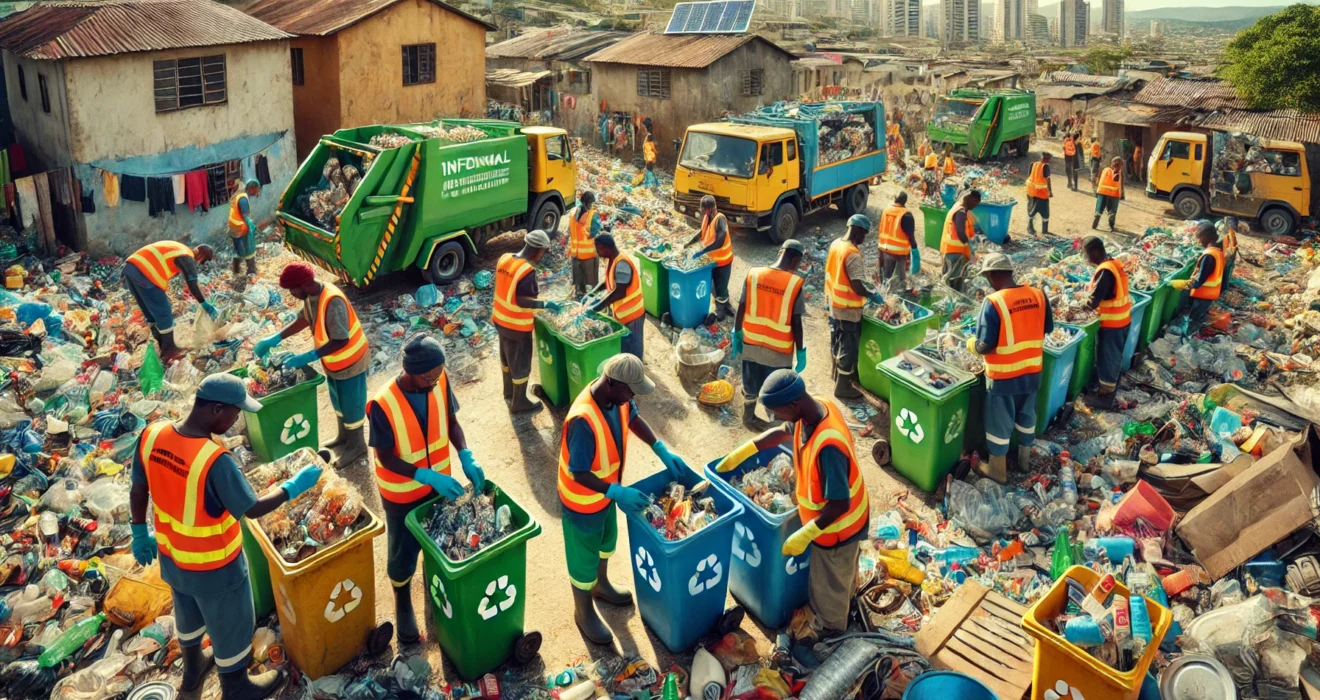
Empowering Informal Waste Collectors: A Path to Sustainable Waste Management
Introduction: The Role of Informal Waste Collectors in Kenya
In Kenya, as in many developing countries, waste management is an increasingly pressing issue. Urbanization, population growth, and industrial expansion have led to a surge in waste production, and the formal waste management systems in many cities have struggled to keep pace. In response, informal waste collectors have emerged as key players in the waste management process, often filling the gaps left by formal systems. These workers, commonly referred to as “waste pickers” or “informal waste collectors,” work outside the scope of formal waste management regulations, but their contribution to the recycling and waste management process is undeniable.
Despite the important role they play, informal waste collectors often face precarious working conditions, legal challenges, and limited access to resources. This article explores how empowering these waste collectors can contribute to a more sustainable waste management system in Kenya, benefiting both the environment and the local communities.
The Informal Waste Collection System in Kenya
Informal waste collectors operate in urban areas, often working in informal settlements or marginalized communities. These workers collect recyclables such as plastic, glass, metal, and paper from households, streets, and landfills. While the formal waste management sector in Kenya primarily focuses on the collection and disposal of household waste, informal waste collectors focus on the recovery of reusable materials that can be recycled or sold.
In Nairobi, for instance, waste pickers play an essential role in diverting waste from landfills and ensuring that recyclable materials are sent to recycling facilities. Without their efforts, much of the waste generated in the city would end up in landfills, contributing to pollution and environmental degradation. Despite their contribution, informal waste collectors are often marginalized, working in unsafe conditions and without access to social protection or legal recognition.
The informal waste collection sector is crucial to Kenya’s recycling efforts, but it is poorly organized and lacks the infrastructure and support that could make it more efficient. By recognizing and empowering waste pickers, Kenya could significantly improve its waste management system, reduce environmental pollution, and create economic opportunities for vulnerable communities.
Challenges Faced by Informal Waste Collectors
Informal waste collectors in Kenya face numerous challenges that hinder their ability to contribute effectively to waste management. One of the main challenges is the lack of legal recognition. Waste pickers operate in a grey area, without formal employment contracts or the rights that come with them. This lack of legal status means that they are often excluded from social safety nets, healthcare, and other benefits that formal workers are entitled to.
Additionally, waste pickers often work in unsafe and hazardous conditions. They are exposed to a variety of health risks, including cuts, bruises, and infections from handling sharp objects, chemical waste, and other hazardous materials. Many waste collectors work without proper protective equipment, such as gloves, masks, or boots, which increases the risk of injury and exposure to harmful substances. The lack of formal training on handling waste safely also exacerbates these risks.
Another significant challenge faced by informal waste collectors is the lack of access to resources and infrastructure. Most waste pickers work independently or in small groups, with limited access to vehicles, storage space, or recycling facilities. This lack of infrastructure means that they often face difficulties in transporting collected materials to recycling centers, leading to inefficiencies in the waste management process. Additionally, waste pickers typically receive low wages for their efforts, which leaves them trapped in a cycle of poverty and exploitation.
Furthermore, the social stigma associated with waste picking often leads to discrimination and marginalization of these workers. Many waste collectors come from poor, vulnerable backgrounds and are often seen as “undesirable” members of society. This stigma not only impacts their self-esteem but also makes it difficult for them to access the resources and opportunities needed to improve their working conditions and livelihoods.
The Environmental Impact of Empowering Informal Waste Collectors
Empowering informal waste collectors can have a significant positive impact on the environment, particularly in terms of waste reduction and recycling. In Kenya, a large proportion of the waste generated, particularly plastic waste, ends up in landfills or is illegally dumped in open spaces. This improper disposal of waste contributes to pollution, land degradation, and the contamination of water sources.
By providing informal waste collectors with the necessary tools, training, and support, Kenya can increase the amount of waste that is properly sorted, recycled, and diverted from landfills. Waste pickers already contribute to recycling efforts by collecting and sorting recyclable materials, but with additional resources, they could increase their efficiency and effectiveness.
For instance, if waste pickers were equipped with proper waste segregation tools, such as bins for different types of materials, they could help ensure that waste is sorted at the source. This would not only reduce the amount of waste that ends up in landfills but also increase the quality of recyclable materials, making it easier to process and reuse them. Additionally, by improving the working conditions and supporting waste pickers with training and protective equipment, Kenya can reduce the environmental hazards associated with informal waste collection.
Another environmental benefit of empowering informal waste collectors is the reduction of greenhouse gas emissions. Landfills are a significant source of methane, a potent greenhouse gas that contributes to global warming. By diverting organic and recyclable materials from landfills, waste pickers help reduce the volume of waste that decomposes anaerobically, thus reducing methane emissions. This, in turn, contributes to Kenya’s efforts to mitigate climate change and reduce its carbon footprint.
Economic Benefits of Empowering Informal Waste Collectors
Empowering informal waste collectors can also bring significant economic benefits to Kenya. As waste management is a critical issue in the country, increasing the efficiency of waste collection and recycling processes can create new economic opportunities and generate revenue. By formalizing the informal waste collection sector and providing waste pickers with the tools, training, and support they need, Kenya can improve the overall efficiency of its waste management system.
One of the main ways to empower informal waste collectors economically is by increasing their access to markets for recyclable materials. Currently, many waste pickers sell their collected materials to middlemen at low prices, reducing their earnings and limiting their financial stability. By creating direct connections between waste pickers and recycling companies, waste pickers could earn higher prices for their materials, improving their income and livelihoods.
Moreover, the formalization of the waste collection sector could create new job opportunities, both for waste pickers and for other members of the community. Training waste collectors to sort and recycle materials properly could lead to the establishment of local recycling centers, providing further economic opportunities. Additionally, empowering informal waste collectors could help reduce the costs of waste management for local governments, as more waste would be diverted from landfills and less money would be needed for waste collection and disposal.
By recognizing and supporting informal waste collectors, Kenya could also reduce the overall environmental costs associated with waste management. Proper waste management practices, including recycling, not only reduce the environmental impact of waste but also create a more sustainable and cost-effective waste management system in the long term.
Social and Health Benefits: Improving Quality of Life for Waste Collectors
The social and health benefits of empowering informal waste collectors are perhaps the most significant and urgent. Informal waste collectors, often marginalized in society, live and work in difficult conditions. By providing them with training, protective equipment, and social protections, Kenya can help improve their quality of life.
One of the main benefits of empowering waste pickers is the improvement of their working conditions. By providing waste collectors with access to proper protective equipment, such as gloves, masks, and boots, their health risks can be greatly reduced. Training them on safe handling practices can also reduce the chances of injury and exposure to hazardous materials, improving their overall health and well-being.
Furthermore, empowering waste collectors can help reduce social stigma. By recognizing their contribution to waste management and providing them with the resources and support they need, waste pickers can gain greater respect and recognition in society. This recognition can help improve their self-esteem and reduce the discrimination they face, allowing them to integrate more fully into society.
Empowering waste collectors also has the potential to improve their financial security. By increasing their access to markets and fair wages, waste pickers can achieve greater economic stability, improving their standard of living. With better financial security, waste collectors can access healthcare, education, and other essential services, improving their overall quality of life.
Conclusion: A Path to Sustainable Waste Management
The empowerment of informal waste collectors is a critical step towards achieving sustainable waste management in Kenya. By providing waste pickers with the resources, training, and recognition they deserve, Kenya can significantly improve its waste management system, reduce environmental pollution, and create economic opportunities for vulnerable communities.
Empowering informal waste collectors not only benefits the environment but also improves the lives of the workers themselves. By formalizing the informal waste collection sector and integrating it into a more sustainable waste management system, Kenya can create a cleaner, greener, and more equitable future for all.


