

Modern and safe dumpsites and landfills are specifically designed to minimize environmental and public health risks through advanced engineering and waste management practices. Here are examples from Africa and other parts of the world that illustrate successful modern landfills:
1. Al-Husayniyah Sanitary Landfill – Jordan
- Location: Al-Husayniyah, Ma’an Governorate, Jordan
- Features: Al-Husayniyah landfill was constructed with international support to address Jordan’s growing waste challenges. It incorporates advanced leachate collection, methane capture, and waste-to-energy facilities. Designed as a fully lined landfill, it prevents groundwater contamination and ensures methane emissions are minimized.
- Benefits: This landfill is environmentally safe, supports the local community by generating energy from methane, and reduces Jordan’s carbon footprint.
2. Pikitup Landfill Sites – Johannesburg, South Africa
- Location: Johannesburg, South Africa
- Features: Pikitup, Johannesburg’s waste management company, manages several sanitary landfills, such as the Marie Louise and Goudkoppies sites. These landfills incorporate liners, leachate treatment systems, and methane gas recovery. Pikitup landfills also have recycling and composting initiatives integrated to reduce the amount of waste sent to landfill.
- Benefits: Pikitup landfills aim to lower environmental risks, reduce emissions, and prolong landfill life by diverting recyclables and organic waste.
3. Bouwer Landfill – Gauteng, South Africa
- Location: Gauteng, South Africa
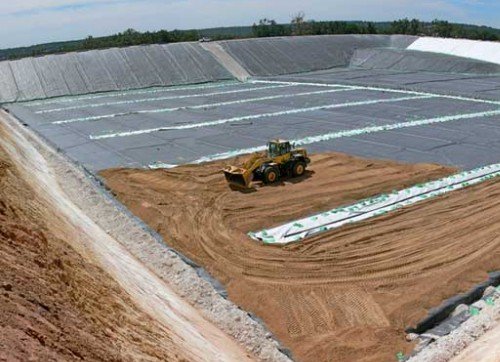
- Features: The Bouwer landfill in Gauteng is a model for sustainable landfill management, featuring a state-of-the-art liner, gas collection systems, and leachate control. It operates with strict environmental monitoring and incorporates a section for sorting recyclable materials.
- Benefits: By preventing pollution and capturing methane for energy, Bouwer Landfill supports both environmental goals and energy production, making it a leading example in Africa.
4. Kitengela Sanitary Landfill (Proposed) – Nairobi, Kenya
- Location: Kitengela, Nairobi Metropolitan Area, Kenya
- Features: Though still in the planning stages, the Kitengela landfill is set to become Kenya’s first sanitary landfill. The facility will incorporate lining systems, methane capture, and leachate treatment to replace the Dandora dumpsite. Plans also include waste sorting and recycling facilities to reduce the amount of waste deposited.
- Benefits: When completed, Kitengela Landfill is expected to set a benchmark in Kenya for sustainable waste management, reducing pollution and health risks.
5. Reppie Waste-to-Energy Plant – Addis Ababa, Ethiopia
- Location: Addis Ababa, Ethiopia
- Features: Built on the former Koshe dumpsite, the Reppie plant is Africa’s first waste-to-energy plant. It incinerates waste to produce electricity, reducing the volume of waste by about 90%. The plant is equipped with pollution control systems to manage emissions and has made Koshe a safer and more efficient site.
- Benefits: Reppie addresses both waste management and energy needs, supplying electricity to thousands of homes in Addis Ababa and minimizing landfill usage by converting waste to energy.
6. The Sudokwon Landfill – Incheon, South Korea
- Location: Incheon, South Korea
- Features: One of the largest and most advanced landfills in the world, Sudokwon integrates multiple layers of lining, extensive leachate treatment facilities, and methane recovery systems. The site also has a waste-to-energy plant, recycling facilities, and a recreational park on closed landfill cells.
- Benefits: Sudokwon demonstrates sustainable landfill management on a massive scale. It produces energy from methane, provides clean water from treated leachate, and offers green spaces for public recreation.
7. Malagrotta Landfill – Rome, Italy
- Location: Rome, Italy
- Features: Once one of Europe’s largest landfills, Malagrotta has transitioned from a conventional dumpsite to a managed landfill with leachate treatment, biogas collection, and renewable energy generation. As the landfill reached capacity, sections were capped with vegetation and used as green space.
- Benefits: Malagrotta is an example of a landfill transforming into a more sustainable operation over time, using biogas for energy and repurposing the land for ecological restoration.
8. Tessman Road Landfill – San Antonio, Texas, USA
- Location: San Antonio, Texas, USA
- Features: Tessman Road landfill uses advanced landfill gas collection, a multi-layer lining system, and extensive leachate treatment. The site has a waste-to-energy plant, turning captured methane into renewable energy. Its adjacent recycling center diverts a large volume of waste from the landfill.
- Benefits: Tessman Road’s renewable energy production and waste diversion practices contribute to environmental sustainability, making it a leading landfill in the USA.
9. Delta Environmental Center Landfill – Lagos, Nigeria
- Location: Lagos, Nigeria
- Features: Managed by LAWMA (Lagos Waste Management Authority), the Delta landfill has modernized Lagos’s waste disposal with features like lined cells, leachate treatment, and gas collection. LAWMA also promotes recycling and composting at the site to reduce waste volumes.
- Benefits: Delta Environmental Center demonstrates improved waste management in Lagos, with an emphasis on environmental protection and public health.
10. Eco Park Landfill – Hong Kong
- Location: Tuen Mun, Hong Kong
- Features: Eco Park is an environmentally responsible landfill with waste-to-energy systems, methane recovery, and leachate treatment. The site includes facilities for recycling and industrial upcycling to support Hong Kong’s waste reduction goals. Eco Park even repurposes portions of its closed landfill area for public parks.
- Benefits: This landfill highlights Hong Kong’s efforts toward sustainability, reducing waste through energy production, recycling, and repurposing land for community use.
These examples from Africa and the world showcase how modern landfills can manage waste sustainably, generate renewable energy, protect natural resources, and contribute to urban development. The integration of advanced technology and environmental safeguards makes these landfills models for effective waste management and public health protection.


