
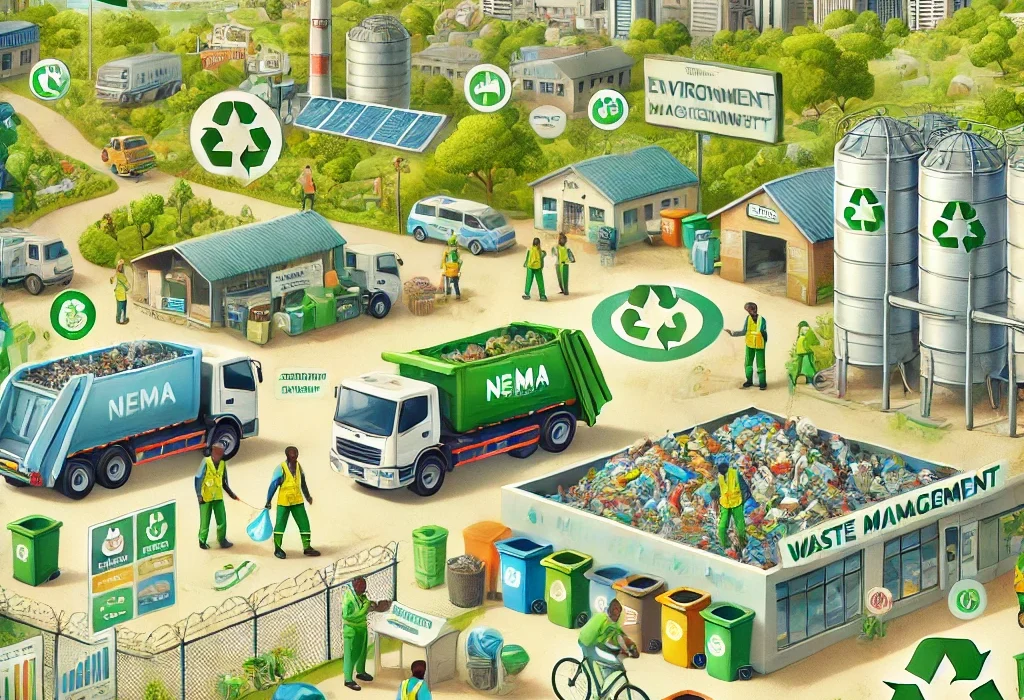
The Role of the National Environment Management Authority (NEMA) in Waste Management in Kenya
In Kenya, the growing urbanization and industrialization have led to an increase in waste generation, making effective waste management a significant challenge. To address this, the National Environment Management Authority (NEMA), established under the Environmental Management and Coordination Act (EMCA), plays a critical role in shaping and enforcing policies related to waste management. NEMA’s responsibility is not just limited to the creation of guidelines but also involves monitoring, educating the public, and collaborating with various stakeholders to ensure that waste is managed sustainably. This article explores the multifaceted role of NEMA in waste management in Kenya, highlighting its regulatory functions, efforts in promoting recycling, public education campaigns, and the enforcement of environmental laws.
1. NEMA’s Role in Formulating and Implementing Environmental Policies
One of the core responsibilities of NEMA is the formulation of policies that govern the management of waste in Kenya. The agency plays a pivotal role in drafting and implementing waste management regulations that aim to protect the environment from the adverse effects of improperly disposed waste. A key piece of legislation under NEMA’s purview is the Environmental Management and Coordination Act (EMCA), which mandates the creation of regulations governing the collection, disposal, and recycling of waste.
The Waste Management Regulations of 2006, formulated under EMCA, are among the key documents that guide the management of waste in Kenya. These regulations set out standards for both general and hazardous waste, detailing how different types of waste should be handled to minimize their environmental impact. NEMA is responsible for ensuring that the provisions of these regulations are adhered to by individuals, businesses, and local authorities. Through these regulations, NEMA has been able to promote waste management practices that align with both national priorities and global standards, including the United Nations Sustainable Development Goals (SDGs) on environmental sustainability.
Additionally, NEMA plays an active role in revising and updating these policies to respond to the evolving challenges of waste management. For instance, NEMA has increasingly been focusing on plastics and their impact on the environment, which has led to the ban on plastic bags in 2017, a significant step in controlling the environmental damage caused by plastic waste. The continuous revision of such policies ensures that Kenya’s waste management strategies remain relevant and effective.
2. Monitoring and Enforcement of Waste Management Laws
While policy development is crucial, the role of NEMA in ensuring compliance is equally important. The agency not only formulates the laws but also enforces them through rigorous monitoring mechanisms. NEMA’s role in enforcement includes the issuance of guidelines, conducting environmental audits, and ensuring that industries and businesses comply with waste management regulations.
One of the primary functions of NEMA in this regard is conducting inspections of businesses, factories, and even informal sectors to ensure that waste is being handled correctly. These inspections help identify sources of pollution and illegal dumping activities, thus allowing NEMA to take corrective actions. If businesses or individuals fail to comply with the regulations, NEMA has the authority to impose fines, issue closure orders, or even initiate legal proceedings. For example, companies found violating the rules on hazardous waste disposal may face significant penalties or be required to clean up contaminated sites.
Moreover, NEMA monitors local authorities and municipalities to ensure that waste is collected, disposed of, and treated in a manner that meets the national standards. This is particularly crucial in urban areas where waste generation is high. Through its monitoring role, NEMA ensures that waste management processes do not contribute to pollution, human health risks, or the degradation of natural resources.
3. Encouraging Waste Minimization and Recycling
In Kenya, as in many parts of the world, waste generation has been on the rise, especially in urban areas. A significant part of NEMA’s strategy in tackling this issue revolves around waste minimization and recycling. By promoting waste reduction strategies, NEMA aims to reduce the volume of waste that ends up in landfills and encourage businesses and consumers to adopt more sustainable practices.
NEMA collaborates with the private sector to foster waste recycling initiatives. For example, the agency supports businesses that engage in recycling waste into reusable products. One of the notable examples of this is the recycling of plastics into building materials or other useful products. NEMA has created frameworks that encourage private companies to develop technologies that turn waste into valuable resources. Through such initiatives, NEMA not only helps reduce waste but also stimulates the economy by promoting industries involved in recycling.
Public-private partnerships have been crucial in these efforts. NEMA partners with waste management companies to improve the infrastructure for recycling in urban centers. The agency has also been involved in launching awareness campaigns to educate the public about the importance of reducing, reusing, and recycling waste. NEMA’s involvement in these campaigns aims to change consumer behavior by encouraging the community to embrace waste separation at source, a key step in facilitating recycling.
Furthermore, NEMA actively promotes the establishment of waste-to-energy projects, which involve the conversion of organic waste into bioenergy. This initiative helps address the growing energy demands of the country while managing waste in an environmentally friendly way. By supporting the growth of such projects, NEMA plays an important role in reducing reliance on fossil fuels and supporting the development of a green energy sector.
4. Public Education and Awareness Campaigns
Beyond regulations and enforcement, NEMA plays a vital role in raising awareness about proper waste management practices among the Kenyan population. Public education is crucial in fostering a culture of responsibility toward waste disposal. NEMA uses a variety of platforms, including media campaigns, workshops, and community outreach programs, to educate the public about the importance of waste management and how they can contribute to solving the country’s waste challenges.
Through school programs, NEMA reaches out to children and young adults, teaching them about waste management practices that they can apply in their daily lives. For instance, NEMA runs campaigns aimed at promoting segregation of waste at source, which involves separating recyclable materials from general waste. This initiative helps ensure that waste can be processed efficiently and reduces the burden on landfills. By educating the public, NEMA empowers individuals and communities to take ownership of their environment, ultimately contributing to a cleaner, healthier Kenya.
In addition, NEMA works with local communities to develop solutions to waste challenges at the grassroots level. These initiatives focus on community-based waste management systems, where local residents are actively involved in waste collection, sorting, and disposal. This approach not only helps reduce waste but also promotes sustainable development within communities, particularly in rural areas where waste management infrastructure may be lacking.
5. Collaborating with Stakeholders
Effective waste management requires the cooperation of multiple stakeholders, and NEMA understands the importance of collaboration. The authority works with various partners, including local governments, businesses, civil society organizations, and international agencies, to ensure that Kenya’s waste management system is efficient and sustainable.
At the local government level, NEMA collaborates with municipalities to develop and implement waste management strategies tailored to the specific needs of different regions. For example, in urban areas, NEMA works closely with municipal authorities to improve waste collection systems, while in rural areas, it focuses on promoting composting and waste segregation.
International partnerships are also crucial in enhancing Kenya’s waste management practices. NEMA collaborates with international organizations such as the United Nations Environment Programme (UNEP), World Bank, and African Development Bank to access technical expertise, funding, and resources that help implement sustainable waste management projects. These partnerships allow NEMA to align Kenya’s waste management policies with global best practices and learn from the experiences of other countries facing similar challenges.
6. NEMA’s Role in Addressing Emerging Waste Challenges
As Kenya’s economy grows, new waste challenges are emerging. For instance, the increasing use of e-waste (electronic waste) poses significant environmental and health risks. NEMA is at the forefront of tackling this emerging challenge by developing regulations that guide the disposal and recycling of electronic products. The agency works with electronic manufacturers, retailers, and consumers to ensure that e-waste is disposed of in an environmentally sound manner.
In addition, NEMA is also addressing plastic waste, which continues to be a major environmental problem in Kenya. Beyond the ban on plastic bags, NEMA is working on strategies to reduce plastic waste by encouraging the use of biodegradable materials and promoting recycling within the plastics industry. NEMA’s approach involves both regulatory measures and public awareness campaigns, aimed at reducing plastic consumption and promoting more sustainable alternatives.
Conclusion
The National Environment Management Authority (NEMA) plays a central role in shaping Kenya’s waste management landscape. Its responsibilities span from policy formulation and enforcement to public education and stakeholder collaboration. Through its efforts in waste minimization, recycling promotion, and regulatory enforcement, NEMA is helping Kenya tackle its waste management challenges and move towards a more sustainable future. However, the effectiveness of these initiatives requires continued support from all sectors of society, from government to businesses to individual citizens. Only through collective action can Kenya achieve a cleaner, greener environment and a sustainable waste management system that serves the needs of its growing population.


