
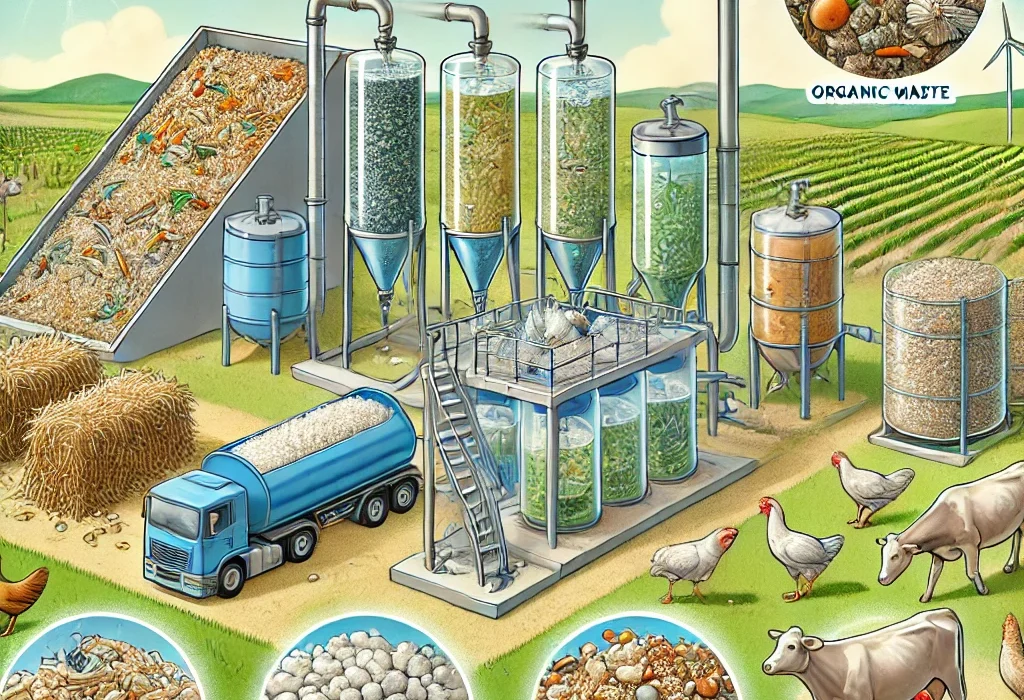
Fermentation: A Game-Changer in Organic Waste Feed Production
Sustainable agriculture has become a global priority as traditional farming practices face increasing pressure from environmental degradation, resource scarcity, and population growth. One of the most pressing challenges is the management of organic waste and the rising demand for affordable livestock feed. Fermentation, a natural biological process, has emerged as a revolutionary solution to address these issues. By using microorganisms to convert organic waste into nutrient-rich, safe, and digestible animal feed, fermentation offers a sustainable way to tackle waste and improve agricultural productivity. This article explores the science, benefits, and potential of fermentation in organic waste feed production.
Understanding Fermentation
Fermentation is a metabolic process in which microorganisms such as bacteria, yeast, and fungi break down organic matter. Under controlled conditions, these microbes consume sugars and other nutrients in organic waste, producing valuable by-products such as organic acids, enzymes, and proteins. While fermentation is commonly associated with food and beverage production—such as bread, beer, and yogurt—it has significant applications in agriculture and waste management.
In the context of feed production, fermentation is used to enhance the nutritional value and safety of organic waste materials. By breaking down complex compounds, fermentation makes nutrients more accessible to animals. It also helps eliminate harmful pathogens and toxins, ensuring the feed is safe for consumption. This process transforms organic waste into a high-quality resource for livestock farming, reducing dependency on traditional feed crops.
Types of Fermentation Used in Feed Production
There are three main types of fermentation relevant to organic waste feed production: lactic acid fermentation, alcoholic fermentation, and solid-state fermentation. Each type serves specific purposes depending on the nature of the waste and the nutritional requirements of the livestock.
Lactic acid fermentation involves the use of lactic acid bacteria to convert sugars into lactic acid. This method is widely used in silage production, where crops like maize, grass, and other agricultural residues are fermented to create long-lasting, nutrient-rich feed. Lactic acid fermentation is particularly effective in preserving the feed and preventing spoilage.
Alcoholic fermentation, facilitated by yeast, breaks down sugars into alcohol and carbon dioxide. Although less common in feed production, this process can be used to treat certain types of organic waste, enhancing their energy content for specific livestock needs.
Solid-state fermentation is a method where microorganisms grow on solid organic materials with minimal water. This technique is highly effective for processing agricultural residues and food waste, increasing their protein content and digestibility. Solid-state fermentation is particularly useful for producing feed from fibrous materials that are otherwise hard for animals to digest.
The Science Behind Fermentation
The effectiveness of fermentation lies in its ability to alter the biochemical composition of organic waste. During the process, microorganisms produce enzymes that break down complex carbohydrates, proteins, and fats into simpler, more digestible forms. For example, cellulase enzymes break down cellulose in plant materials into glucose, while proteases convert proteins into amino acids. These simplified nutrients are easier for livestock to absorb, improving feed efficiency.
Fermentation also reduces anti-nutritional factors in organic waste. Many agricultural residues and by-products contain compounds that can inhibit nutrient absorption or be harmful to animals. For instance, phytic acid, which binds essential minerals, is broken down during fermentation, making these minerals available to livestock. Similarly, fermentation can detoxify harmful compounds such as aflatoxins in moldy grains, rendering them safe for consumption.
Benefits of Fermentation in Organic Waste Feed Production
One of the most significant advantages of fermentation is its ability to upcycle organic waste into valuable feed. Agricultural residues, food scraps, and by-products from food processing, which are often discarded, can be transformed into a cost-effective resource. This reduces waste sent to landfills, mitigating environmental issues such as methane emissions and groundwater contamination.
Fermentation also enhances the nutritional value of organic waste. The process increases the protein, vitamin, and enzyme content of feed, improving livestock health and productivity. Animals fed on fermented feed often show better weight gain, improved digestion, and enhanced immune response compared to those on traditional diets.
Another critical benefit is the preservation of feed. Fermentation acts as a natural preservative, extending the shelf life of organic waste by preventing spoilage. This is particularly valuable in regions with limited access to refrigeration or where surplus waste needs to be stored for future use.
From an economic perspective, fermentation reduces the cost of feed production. By converting low-value waste into high-quality feed, farmers can save on feed expenses while contributing to a circular economy. This is especially beneficial for smallholder farmers who face financial constraints in purchasing commercial feed.
Applications of Fermented Feed in Livestock Farming
Fermented feed is versatile and can be used for various livestock, including poultry, cattle, pigs, and aquaculture. In poultry farming, fermented feed improves gut health and enhances egg production. For cattle, it provides a balanced diet that promotes milk yield and growth. Pigs fed on fermented feed exhibit better feed conversion ratios, reducing the overall cost of production. In aquaculture, fermented feed improves water quality by minimizing feed wastage and nutrient runoff.
The use of fermented feed also aligns with organic and sustainable farming practices. Many organic farming standards permit the use of fermented feed, as it eliminates the need for synthetic additives and enhances soil health when animal manure is used as fertilizer.
Challenges in Fermentation-Based Feed Production
Despite its numerous benefits, the adoption of fermentation in feed production faces challenges. One major issue is the lack of technical knowledge and expertise among farmers. Fermentation requires precise conditions, such as temperature, moisture, and microbial inoculation, to be effective. Training and education programs are essential to equip farmers with the skills needed for successful fermentation.
Infrastructure limitations also pose a challenge. Fermentation facilities require specialized equipment, such as fermenters and storage units, which may be expensive for small-scale farmers. Governments and development agencies can play a role by providing subsidies and financial support to promote fermentation technologies.
Regulatory barriers are another concern. The use of fermented feed must comply with safety and quality standards to prevent risks to animal and human health. Clear guidelines and regular monitoring are necessary to ensure that fermentation practices meet these requirements.
Success Stories and Innovations
Several countries have successfully integrated fermentation into their agricultural systems. In Japan, fermented feed is a common practice in pig farming, significantly reducing waste and feed costs. Similarly, in South Korea, food waste recycling programs incorporate fermentation to produce high-quality feed for livestock. These initiatives have demonstrated the scalability and effectiveness of fermentation in diverse settings.
Innovations in fermentation technology are also making the process more accessible and efficient. Automated fermenters equipped with sensors and controls allow farmers to monitor and optimize fermentation conditions in real-time. Advances in microbial inoculants have improved the speed and consistency of fermentation, making it easier for farmers to adopt the practice.
The Future of Fermentation in Feed Production
The potential of fermentation to revolutionize organic waste feed production is immense. As awareness of its benefits grows, more farmers and agribusinesses are likely to adopt fermentation as a sustainable solution. Research and development will continue to enhance the efficiency and affordability of fermentation technologies, making them accessible to a broader audience.
Collaboration between stakeholders is crucial to promote fermentation-based feed production. Governments must create policies and incentives to encourage the adoption of fermentation, while private sector players can invest in infrastructure and innovation. Educational programs and demonstration projects can help farmers understand the value of fermented feed and its role in sustainable agriculture.
Conclusion
Fermentation is a game-changer in the field of organic waste feed production. By transforming waste into high-quality animal feed, this natural process addresses critical challenges in waste management, agricultural sustainability, and food security. Its environmental, economic, and nutritional benefits make it an essential tool for modern farming practices. While challenges remain, the continued advancement of fermentation technologies and collaborative efforts among stakeholders will pave the way for a more sustainable and resilient agricultural future.


