
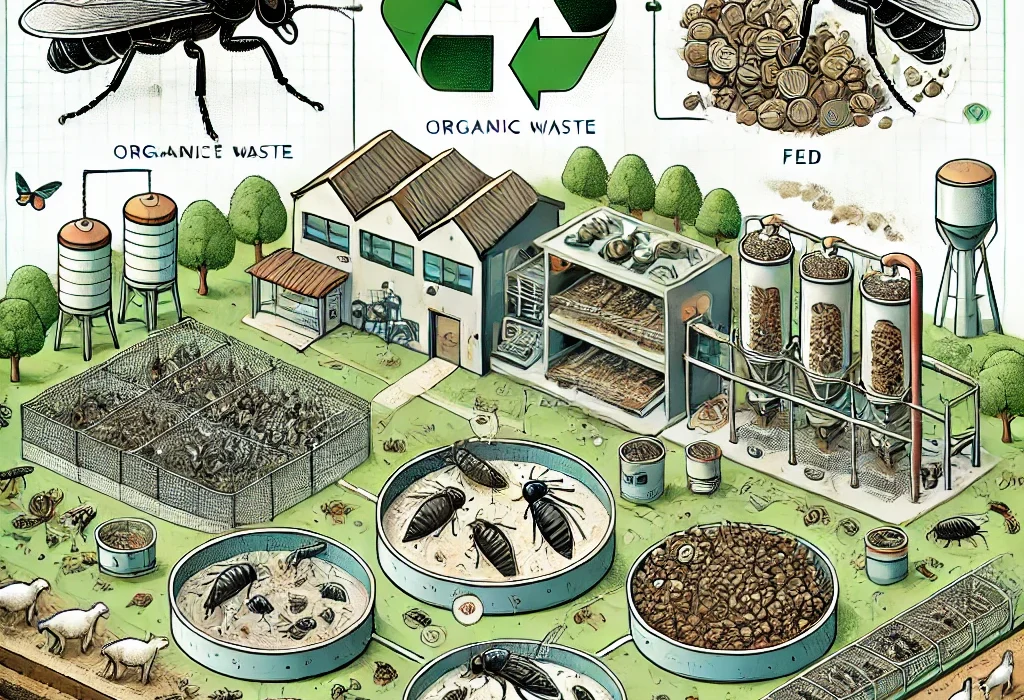
How Insect Farming Can Bridge the Gap Between Organic Waste and Animal Feed
The rapid growth of the global population has placed immense pressure on agricultural systems to produce sufficient food for both humans and animals. With traditional livestock feed sources becoming increasingly unsustainable, innovative solutions are necessary to address this challenge. Insect farming has emerged as a promising method to convert organic waste into high-quality animal feed. By utilizing insects to upcycle waste, this approach simultaneously tackles waste management issues and provides a sustainable alternative to conventional feed. This article explores the potential of insect farming as a transformative tool for bridging the gap between organic waste and animal feed.
The Growing Challenge of Organic Waste and Feed Sustainability
Organic waste, including food scraps, crop residues, and agricultural by-products, accounts for a significant portion of global waste. According to the Food and Agriculture Organization (FAO), about 1.3 billion tons of food are wasted annually. Much of this waste ends up in landfills, where it contributes to greenhouse gas emissions and environmental degradation. At the same time, the demand for livestock feed is increasing, with traditional feed sources like soy and fishmeal facing resource constraints and environmental concerns. The need for alternative feed sources that are cost-effective, environmentally friendly, and nutritionally adequate has never been more urgent.
What Is Insect Farming?
Insect farming involves the mass production of insects for various purposes, including human consumption, animal feed, and waste recycling. In the context of organic waste management, insects like black soldier fly larvae (BSFL), mealworms, and crickets are reared to consume organic waste. These insects efficiently convert waste into protein and fat, which can then be harvested and processed into animal feed. The process is not only environmentally sustainable but also highly efficient, as insects require significantly fewer resources—such as land and water—compared to traditional feed crops.
The Role of Black Soldier Fly Larvae in Waste Conversion
The black soldier fly (BSF) is one of the most commonly farmed insects for waste management and animal feed production. BSFL are highly efficient decomposers that can consume a wide range of organic materials, including food scraps, agricultural residues, and even manure. As the larvae feed on waste, they grow rapidly, accumulating high levels of protein and fat. Within a matter of weeks, the larvae can be harvested and processed into animal feed ingredients, while the remaining waste is converted into nutrient-rich organic compost.
BSFL are particularly advantageous because they can thrive on low-value organic waste that would otherwise be discarded. Their ability to break down waste quickly makes them an ideal solution for managing food waste in urban and agricultural settings. Additionally, the larvae are rich in essential amino acids, making them a highly nutritious feed option for livestock, poultry, and fish.
Benefits of Insect Farming for Feed Production
One of the primary benefits of insect farming is its potential to reduce reliance on traditional feed ingredients like soy and fishmeal. Soy farming is a major driver of deforestation, while fishmeal production contributes to overfishing. In contrast, insect farming utilizes organic waste, a readily available and underutilized resource, to produce feed. This reduces the environmental impact of feed production while addressing waste management challenges.
Insect farming is also economically advantageous. Organic waste is typically inexpensive or even free, making it a cost-effective input for feed production. Farmers who adopt insect-based feed can benefit from lower feed costs, improving their profitability. Moreover, insect farming can be scaled to suit different needs, from small-scale operations to industrial facilities, making it accessible to farmers in both developed and developing regions.
Nutritionally, insect-based feeds are comparable to, or even superior to, conventional feed ingredients. Insects are rich in protein, fat, and essential nutrients, making them an excellent feed option for livestock. Studies have shown that animals fed with insect-based diets often exhibit improved growth rates and health outcomes. For example, poultry fed on BSFL meal have shown better feed conversion ratios and healthier gut microbiota compared to those on traditional diets.
The Environmental Impact of Insect Farming
In addition to its direct benefits for feed production, insect farming has significant environmental advantages. By upcycling organic waste, insect farming helps reduce the volume of waste sent to landfills, thereby mitigating methane emissions. Methane is a potent greenhouse gas that contributes to global warming, and reducing its release is critical for combating climate change.
Insect farming also requires minimal resources compared to traditional agriculture. Insects have high feed conversion efficiencies, meaning they can produce more protein with less input. They also require significantly less water and land, making them a sustainable alternative in regions with limited natural resources. Furthermore, the by-products of insect farming, such as frass (insect excrement), can be used as organic fertilizer, enriching soils and promoting sustainable farming practices.
Challenges in Adopting Insect Farming
Despite its many benefits, the adoption of insect farming faces several challenges. One major barrier is the lack of awareness and understanding of the potential of insects as feed. Many farmers and consumers are unfamiliar with the concept, and some may have reservations about the safety and efficacy of insect-based diets. Public education campaigns and demonstration projects are essential to build trust and acceptance.
Regulatory hurdles also pose a challenge. In many countries, the use of insects as animal feed is still a relatively new concept, and regulatory frameworks are not yet fully developed. Governments must establish clear guidelines to ensure the safety and quality of insect-based feeds, addressing concerns about contamination and disease transmission.
Scaling up insect farming operations can also be challenging, particularly in regions with limited infrastructure. Large-scale insect farming requires specialized equipment and facilities, which can be expensive to establish. Partnerships between governments, private sector players, and non-governmental organizations are crucial to provide the necessary support and funding.
Success Stories in Insect Farming
Several countries have already embraced insect farming as a sustainable solution for feed production. In Kenya, for example, black soldier fly farming has gained popularity among smallholder farmers and agribusinesses. Projects like the “Insect Protein for Feed” initiative have demonstrated the feasibility of using BSFL to convert organic waste into feed for poultry and fish. These projects have not only improved waste management but also boosted the incomes of participating farmers.
In the Netherlands, large-scale insect farming facilities are producing tons of insect-based feed ingredients annually. Companies like Protix are leading the way in integrating insect farming into the global food system. Their products are used in livestock, aquaculture, and pet food industries, showcasing the versatility of insect-based feeds.
The Future of Insect Farming
The potential of insect farming to bridge the gap between organic waste and animal feed is immense. As awareness of its benefits grows, more farmers, businesses, and governments are likely to adopt this innovative approach. Advances in technology will further enhance the efficiency and scalability of insect farming, making it an integral part of sustainable agriculture.
Collaboration between stakeholders is essential to realize the full potential of insect farming. Governments must create supportive policies and invest in research and development. Farmers and agribusinesses should embrace insect farming as a viable alternative to traditional feed production. Public awareness campaigns can help dispel misconceptions and promote the adoption of insect-based feeds.
Conclusion
Insect farming represents a groundbreaking solution to two of the most pressing challenges of our time: organic waste management and sustainable livestock feed production. By converting waste into high-quality feed, insect farming reduces environmental impact, enhances food security, and supports the livelihoods of farmers. While challenges remain, the benefits of this innovative approach far outweigh the barriers. With continued investment, research, and collaboration, insect farming can play a pivotal role in creating a more sustainable and resilient agricultural system.


