
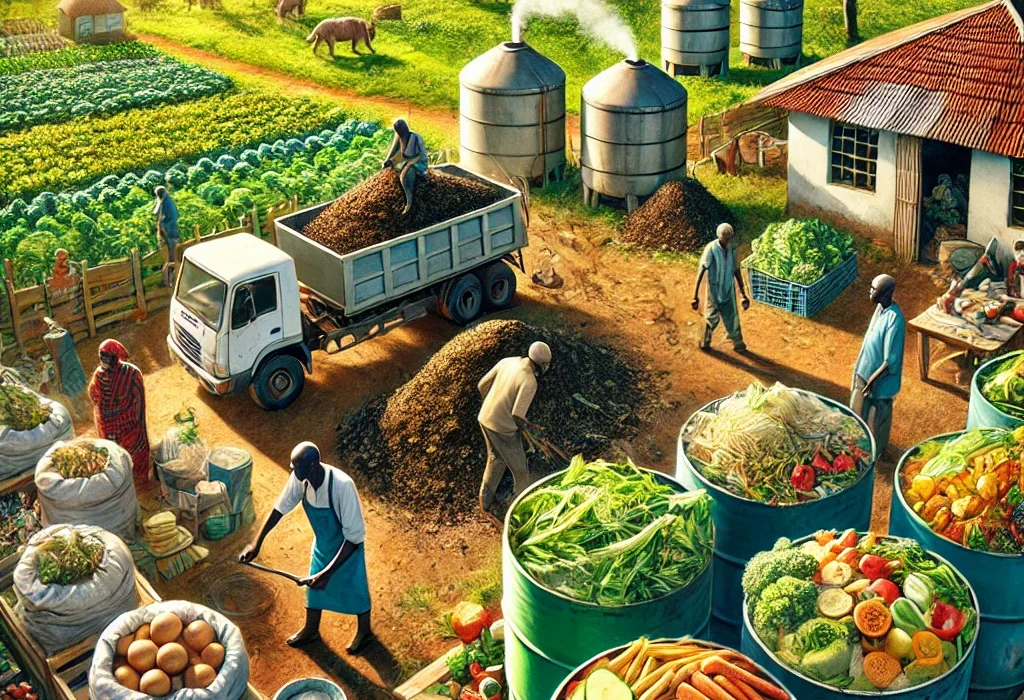
The Untapped Potential of Organic Waste in Kenya: A Path to Sustainability
Organic waste is one of the most abundant and underutilized resources in Kenya today. From agricultural residues to food waste generated by households, markets, and restaurants, organic materials constitute a significant portion of the country’s total waste stream. However, despite its potential, organic waste is often treated as a burden, discarded in landfills, or burned, contributing to environmental degradation. This article explores the untapped potential of organic waste in Kenya and discusses how it can be harnessed to promote sustainability, generate economic opportunities, and mitigate the environmental impact of waste management.
Understanding Organic Waste in Kenya
In Kenya, organic waste primarily refers to biodegradable materials that are derived from plant or animal sources. This includes food scraps, agricultural residues such as crop stubble and peels, yard waste, and even biodegradable packaging materials. According to estimates, organic waste makes up more than 50% of the total waste generated in urban areas, with food waste being the largest contributor.
The majority of this organic waste is disposed of in landfills or through open dumping, where it decomposes anaerobically, producing methane—a potent greenhouse gas that contributes to climate change. The improper disposal of organic waste also leads to the contamination of water sources and the spread of disease, particularly in low-income areas where waste management infrastructure is often inadequate. This presents a significant challenge, but it also highlights the enormous potential of organic waste as a resource if managed correctly.
The Role of Organic Waste in Sustainable Agriculture
One of the most promising ways to harness the potential of organic waste is by transforming it into compost and organic fertilizers. Organic waste, when properly processed, can enrich the soil by adding valuable nutrients that improve soil structure, increase moisture retention, and enhance soil biodiversity. This is especially important in Kenya, where soil fertility is a major concern for farmers, particularly smallholder farmers who rely on traditional farming methods.
Composting organic waste creates a sustainable and cost-effective solution to improving agricultural productivity. By converting food scraps, agricultural residues, and yard waste into nutrient-rich compost, farmers can reduce their dependence on chemical fertilizers, which can be expensive and harmful to the environment. Composting also helps to close the loop in the agricultural system by recycling waste back into the soil, creating a more circular and sustainable farming model.
Several community-based organizations in Kenya have already started composting initiatives, showing the potential of organic waste to drive agricultural sustainability. For example, in areas such as Kiambu County, local farmers are using compost produced from organic waste to improve crop yields, while simultaneously reducing the amount of waste that ends up in landfills. These initiatives not only promote sustainable agriculture but also create economic opportunities by providing farmers with a valuable product that enhances their livelihoods.
Organic Waste as a Source of Renewable Energy
In addition to its use as compost, organic waste can also be harnessed as a source of renewable energy through processes like anaerobic digestion. Anaerobic digestion involves breaking down organic materials in the absence of oxygen to produce biogas—a mixture of methane and carbon dioxide. This biogas can be used as an alternative to fossil fuels for cooking, heating, and even electricity generation.
In Kenya, where access to clean and affordable energy remains a challenge in many rural areas, biogas presents a viable solution. The Kenya Biogas Program, which supports the installation of biogas digesters in rural households, is one example of how organic waste can be converted into renewable energy. By using animal manure, kitchen waste, and agricultural residues to produce biogas, rural communities can meet their energy needs without relying on firewood, charcoal, or kerosene, which contribute to deforestation, air pollution, and health problems.
Furthermore, the production of biogas can help address the growing waste management problem in Kenya’s urban centers. By setting up anaerobic digestion plants in strategic locations, cities can turn organic waste into biogas, which can then be used to generate electricity or fuel public transportation, reducing reliance on non-renewable energy sources.
The Economic Potential of Organic Waste Recycling
The recycling of organic waste presents a significant economic opportunity for Kenya. As the country continues to grapple with waste management issues, the recycling sector has the potential to create jobs, stimulate local economies, and reduce the costs associated with waste disposal. This is particularly important in urban areas such as Nairobi, where population growth and rapid urbanization have led to increased waste generation, but waste management systems have struggled to keep pace.
Small and medium-sized enterprises (SMEs) in Kenya are already capitalizing on the economic potential of organic waste by turning it into compost, biogas, and other value-added products. These businesses not only create jobs but also help reduce the volume of waste that ends up in landfills. In rural areas, organic waste recycling can create opportunities for entrepreneurship, as farmers, waste pickers, and other community members can engage in composting and biogas production.
In addition to creating jobs and supporting local businesses, the recycling of organic waste can also provide a steady supply of raw materials for industries such as agriculture, energy production, and even manufacturing. For example, biogas can be used to power small-scale factories or transport vehicles, while compost can be sold to farmers and garden centers. By tapping into this economic potential, Kenya can create a more sustainable and resilient economy that is less dependent on external resources.
The Challenges of Organic Waste Management in Kenya
Despite the clear benefits of harnessing organic waste, there are several challenges that need to be addressed in order to unlock its full potential. One of the primary obstacles is the lack of awareness and education around the value of organic waste. Many Kenyans still view waste as something to be discarded rather than a resource that can be repurposed. As a result, there is a need for widespread public education campaigns to raise awareness about the importance of waste segregation, recycling, and composting.
Another challenge is the lack of infrastructure and investment in waste management systems, particularly in rural and informal urban settlements. While some communities have implemented successful organic waste recycling programs, many others lack the necessary equipment, facilities, and financial support to scale these initiatives. Public-private partnerships and government support are essential for building the infrastructure needed to manage organic waste on a larger scale.
Furthermore, there is the challenge of managing organic waste in a way that ensures it is processed safely and effectively. For example, biogas production requires the use of specialized digesters, while composting requires proper management to avoid the spread of disease. Proper training, technical support, and access to appropriate technology are crucial to ensuring that organic waste is handled in a way that maximizes its potential while minimizing risks to human health and the environment.
Moving Towards a Circular Economy
To truly unlock the potential of organic waste, Kenya must embrace a circular economy model, where resources are continuously reused, and waste is minimized. In a circular economy, organic waste is not seen as a burden but as a resource that can be used to generate value in multiple ways. This requires a shift in mindset at both the individual and institutional levels, with greater emphasis on reducing waste, reusing materials, and recycling organic waste into compost, energy, and other products.
The Kenyan government has already taken steps in this direction by implementing policies that promote recycling and waste management, such as the ban on plastic bags in 2017. However, more needs to be done to support organic waste management initiatives, particularly in rural areas and informal settlements. By investing in waste-to-resource technologies and creating incentives for businesses and communities to recycle organic waste, Kenya can move closer to a more sustainable and resilient future.
Conclusion: A Path to a Sustainable Future
The untapped potential of organic waste in Kenya presents an opportunity to address some of the country’s most pressing challenges, including waste management, environmental degradation, and energy poverty. By harnessing organic waste as a resource, Kenya can create a more sustainable agricultural sector, reduce reliance on fossil fuels, and generate economic opportunities for communities across the country.
While challenges remain, the success stories of organic waste initiatives in Kenya provide hope for the future. With greater investment in infrastructure, public education, and innovation, Kenya can unlock the full potential of organic waste and chart a path toward a more sustainable and prosperous future for all.


