
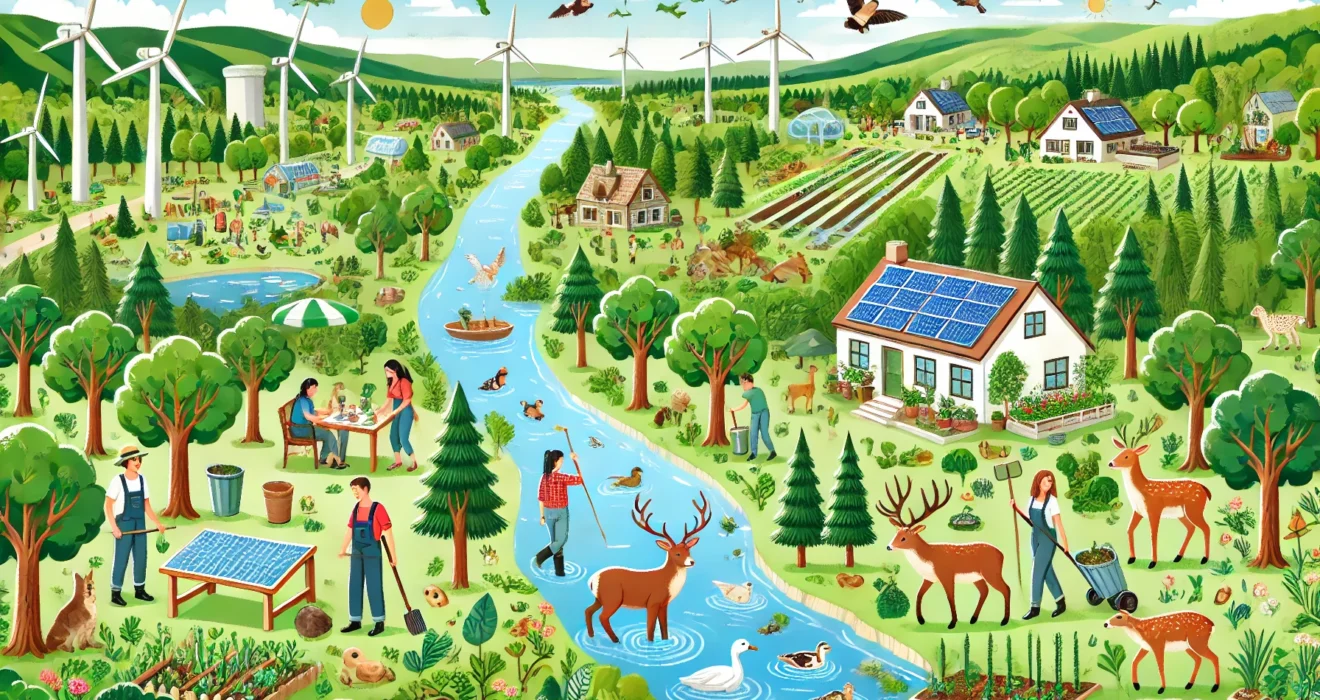
Promote Sustainable Coexistence Between Humans, Animals, and the Environment
Effective waste management plays a critical role in conservation by minimizing the harmful impact of human activities on natural habitats. The integration of these two fields focuses on reducing pollution, reclaiming degraded land, and ensuring the sustainable coexistence of humans, wildlife, and ecosystems. By adopting innovative waste handling practices, such as recycling organic materials, rehabilitating dumpsites, and reducing landfill dependency, we can protect biodiversity and restore balance to our environment. This approach not only safeguards wildlife but also promotes a circular economy, encouraging communities to view waste as a resource rather than a liability.
Here’s how this can be achieved:
1. Promote Sustainable Land Use Practices
- Modern Landfills: Design eco-friendly landfills that minimize land occupation and environmental impact. Proper landfill management reduces the need for new dumping sites that encroach on natural habitats.
- Waste-to-Energy Initiatives: Convert waste into energy to reduce the reliance on landfills, freeing up land for conservation purposes.
Impact: This approach ensures minimal disruption to ecosystems and reduces the demand for land conversion.
2. Waste Diversion to Protect Wildlife
- Organic Waste Recycling: Develop composting and organic waste processing facilities to recycle biodegradable materials into fertilizer or animal feed. This reduces the likelihood of wildlife accessing harmful dumpsites.
- Plastic and Hazardous Waste Control: Implement strict recycling and disposal systems to prevent non-biodegradable waste from reaching sensitive ecosystems, where it could harm flora and fauna.
Impact: Redirecting waste away from natural habitats minimizes pollution and health risks to wildlife.
3. Circular Economy Models
- Upcycling and Reuse Programs: Encourage communities to reuse and upcycle materials instead of discarding them. This reduces the waste footprint and the need for further resource extraction from natural habitats.
- Industrial Symbiosis: Partner with industries to repurpose by-products and waste as raw materials for other industries, reducing waste output and conserving natural resources.
Impact: A circular economy reduces human dependence on raw materials, decreasing habitat destruction for resource extraction.
4. Restoration of Degraded Areas
- Dumpsite Rehabilitation: Transform old dumpsites into green spaces or wildlife corridors. This can include planting native vegetation to restore biodiversity and provide a habitat for displaced species.
- Soil Remediation: Treat polluted soils near landfills to make them viable for plant growth and ecosystem restoration.
Impact: Rehabilitating degraded areas promotes conservation and helps reintegrate wildlife into safe, natural spaces.
5. Community and Stakeholder Engagement
- Education on Sustainable Practices: Train communities near natural habitats on proper waste disposal and recycling techniques to reduce illegal dumping and encroachment.
- Waste-Free Zones: Work with local authorities to declare sensitive ecosystems as waste-free zones, with strict enforcement of dumping regulations.
Impact: Empowering local populations ensures sustainable waste management practices are adopted and enforced near conservation areas.
6. Smart Urban Development
- Integrated Urban Planning: Advocate for urban designs that incorporate waste management systems like centralized recycling hubs, keeping waste away from nearby ecosystems.
- Buffer Zones: Create green buffer zones between human settlements and natural habitats, supported by effective waste diversion measures.
Impact: These strategies limit urban sprawl into conservation areas and prevent habitat destruction.
7. Collaborative Efforts Between Conservation and Waste Management Bodies
- Joint Monitoring Programs: Establish teams to monitor the impact of waste on natural habitats and recommend solutions.
- Funding for Conservation: Use revenues from recycling and waste management projects to fund conservation activities like habitat preservation and reforestation.
Impact: Collaboration ensures resources and expertise are pooled to achieve common environmental goals.
8. Eco-Tourism and Waste-Free Wildlife Zones
- Eco-Tourism Policies: Integrate sustainable waste management into eco-tourism by ensuring waste generated by visitors is managed responsibly.
- Zero-Waste Parks: Equip protected areas with systems to process waste locally without harming the ecosystem.
Impact: This preserves natural habitats while promoting economic opportunities through tourism.
Outcome of Integration
- Habitat Protection: Reduced human encroachment ensures wildlife has adequate space to thrive.
- Reduced Pollution: Proper waste management decreases land, water, and air pollution in conservation zones.
- Enhanced Biodiversity: Sustainable practices help restore ecosystems and maintain biodiversity.


