

Coverage of Waste Management by the Media
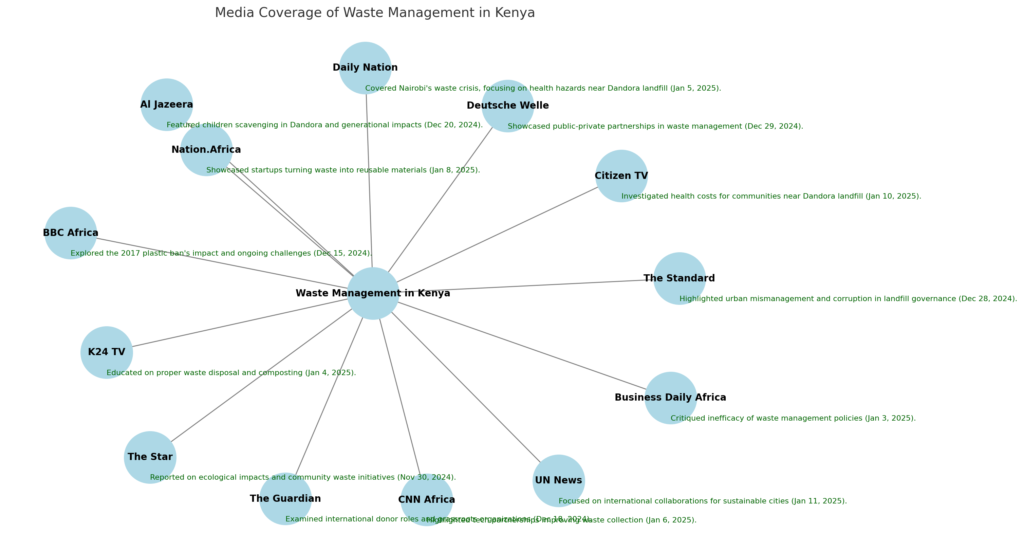
Kenya’s waste management and landfill crisis have garnered significant attention from various media outlets. This article delves into how different media platforms have reported on these issues, examining their perspectives, insights, and proposed solutions. Below, we explore key coverage under distinct themes to highlight the depth of the reporting and the media’s role in shaping public understanding.
The Waste Crisis in Kenyan Cities
Major Kenyan cities, such as Nairobi and Mombasa, have struggled with burgeoning waste management challenges. The Daily Nation, one of Kenya’s leading newspapers, frequently highlights the issue. In a recent article titled “Mountains of Garbage: Nairobi’s Waste Crisis” (published on January 5, 2025) (link), the publication detailed the overflowing Dandora landfill, which serves Nairobi. The piece emphasized the health hazards posed to residents living near the site and criticized the inefficiencies in waste collection systems managed by the Nairobi City Council.
Similarly, The Standard, another major Kenyan news outlet, published an exposé, “Kenya’s Growing Landfill Woes” (published on December 28, 2024) (link). The article painted a grim picture of urban mismanagement and pointed to corruption as a barrier to implementing sustainable waste management solutions. Both outlets agree on the urgency of addressing Kenya’s landfill problems but differ slightly in their focus, with the Daily Nation emphasizing public health and The Standard delving into governance issues.
Environmental Impacts and Advocacy
Kenya’s vibrant media landscape also includes environmental advocacy, with platforms like The Star reporting extensively on the ecological toll of unmanaged waste. An article titled “Plastic Pollution: Choking Kenya’s Rivers and Oceans” (published on November 30, 2024) (link) spotlighted how inadequate recycling systems contribute to plastic pollution. The Star emphasized the role of citizen action and community-based waste initiatives in mitigating this crisis.
On the international front, BBC Africa has featured Kenya’s waste management issues in several reports. One notable story, “Kenya’s Plastic Ban: A Step Forward or Just a Band-Aid?” (published on December 15, 2024) (link), examined the impact of the 2017 plastic bag ban. While the ban reduced plastic waste significantly, the report noted a lack of enforcement and alternative materials as ongoing challenges.
Health Implications for Communities Near Landfills
The health risks posed to communities near landfills have been widely documented. Citizen TV Kenya aired an investigative feature titled “Living by the Dump: The Health Costs of Dandora” (published on January 10, 2025) (link). The broadcast highlighted respiratory problems and skin conditions suffered by residents due to toxic emissions from burning waste. The piece also interviewed local health officials who called for stricter waste segregation policies.
In a similar vein, Al Jazeera English explored this issue in its documentary, “Kenya’s Garbage Mountain” (published on December 20, 2024) (link). The feature focused on children scavenging for recyclable materials in Dandora and underscored the intergenerational impact of poor waste management. This report added an international dimension to the conversation, drawing global attention to the plight of affected communities.
Waste Management Policies and Governance
Critiques of policy implementation are another recurring theme in media coverage. Business Daily Africa explored this aspect in its piece, “Policy Paralysis in Kenya’s Waste Management” (published on January 3, 2025) (link). The article examined the inefficacy of existing policies and called for a more robust legal framework to hold waste management contractors accountable.
Moreover, The Guardian published an investigative report, “Kenya’s Waste Problem: Where Policies Fail” (published on December 18, 2024) (link). This piece evaluated the role of international donors in supporting Kenya’s waste management systems while critiquing the lack of transparency in fund allocation. The Guardian also highlighted grassroots organizations striving to fill the policy gaps.
Innovations and Solutions
Despite the grim outlook, there are stories of hope and innovation. Nation.Africa published an article titled “Turning Trash to Treasure: Kenya’s Recycling Entrepreneurs” (published on January 8, 2025) (link). It showcased startups that are converting waste into reusable materials, such as eco-friendly bricks and organic fertilizers. The article underlined the economic potential of a circular economy.
CNN Africa joined the conversation with its report, “Smart Waste Solutions in Kenya” (published on January 6, 2025) (link). The feature highlighted partnerships between tech firms and municipalities to improve waste collection efficiency through digital platforms. Such innovations, according to CNN, could be a game-changer in combating urban waste challenges.
UN News also added a global perspective with its report, “Tackling Waste: Kenya’s Journey Towards Sustainable Cities” (published on January 11, 2025) (link). The report showcased the role of international collaborations in waste management and highlighted Kenya’s commitment to achieving SDG 11 on sustainable cities.
Public Awareness Campaigns
Raising public awareness is another strategy emphasized by media. K24 TV aired a program, “Waste Not, Want Not” (published on January 4, 2025) (link), that educated viewers on proper waste disposal methods and the benefits of composting. The show featured experts who stressed the importance of community participation in managing waste effectively.
International media outlet Deutsche Welle (DW) produced a segment, “Kenya’s War on Waste” (published on December 29, 2024) (link), which showcased successful public-private partnerships in waste management. The report emphasized the need for sustained public engagement to achieve long-term environmental goals.
Conclusion: The Role of Media in Addressing Kenya’s Waste Crisis
Kenyan and international media have played a crucial role in exposing the severity of the waste management and landfill crisis. From local outlets like Daily Nation and Citizen TV to global platforms like BBC Africa and Al Jazeera, each has contributed unique insights. While the coverage highlights the magnitude of the problem, it also underscores the potential for solutions through innovation, policy reform, and public engagement.
As the waste management narrative continues to evolve, media remains a powerful tool for advocacy and change. By documenting the crisis and amplifying voices of affected communities, journalists can inspire collective action to tackle one of Kenya’s most pressing environmental challenges.


